
Building the Iron Condor
Vertical spreads: the building blocks of more complex options strategies
- Vertical spreads are created by buying one option and selling another option at a lower or higher strike price.
- Credit vs. debit spreads.
Build the iron condor with:
- A bear call spread placed above the stock price, and
- A bull put spread placed under the stock price.
Example: PCLN iron condor (3/16/11)
- PCLN at $458 on 3/16/11.
- Note strong support and resistance levels at $443 and $475, respectively.
- Establish the Apr 430/440 put spread for a credit of $2.55.
- Establish the Apr 475/485 call spread for a credit of $3.35.
- Maximum profit = $590/contract; maximum loss = $410.
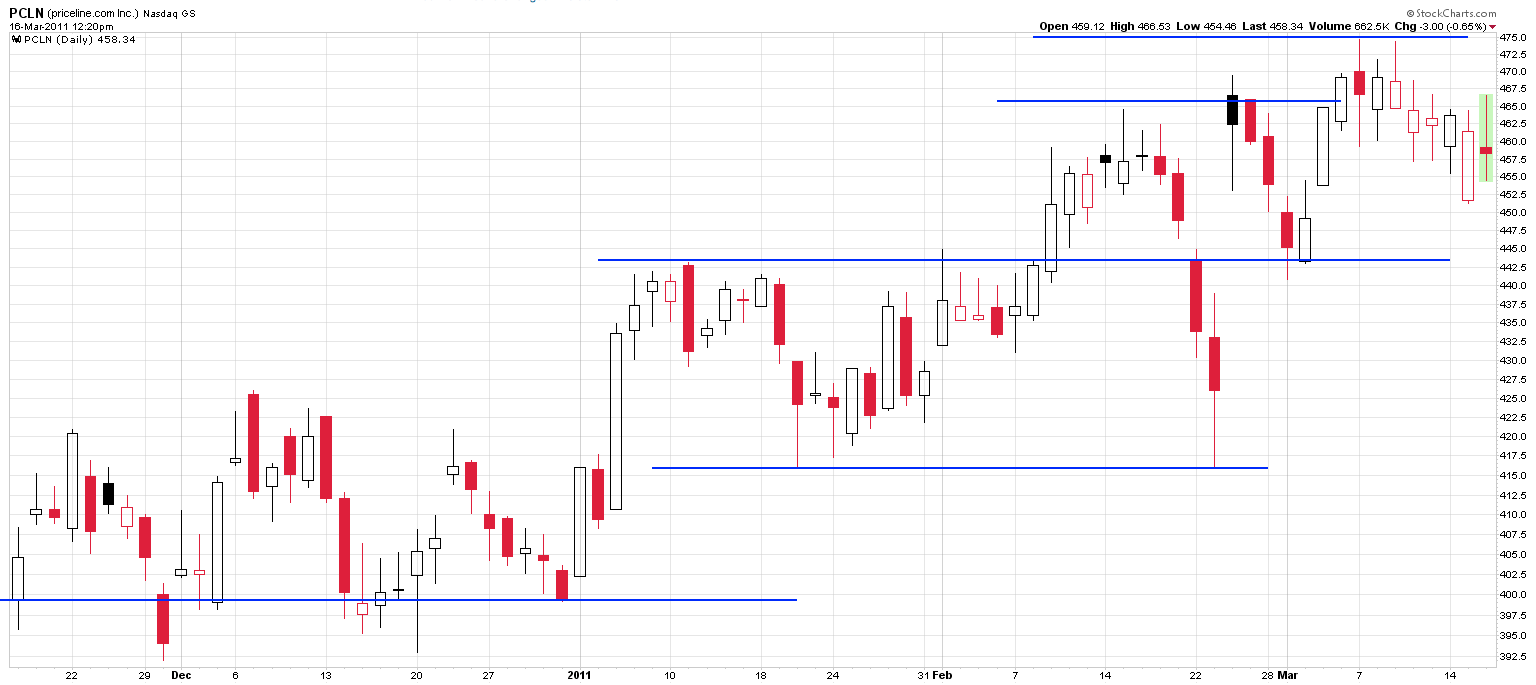
Figure 1 — PCLN daily chart with Apr 430/440 put spread and Apr 475/485 call spread strikes (Mar 2011).
Many Different Condors Are Possible
- Condor Spread (debit) vs. the Iron Condor Spread (credit).
- Look for channeling stocks as candidates.
- Trade the broad indexes every month.
- Strike price placement – near or far?
- Time to expiration?
- Are spreads established simultaneously or by legging into the position?
- Opportunistic model vs. Insurance model.
The Most Common Condor Strategies
Two broad condor strategies are common:
- The Opportunistic Model – Look for a channeling pattern in a stock or index.
- The Insurance Model – Trade every month to generate income.
Within each of these strategies are several possible variations:
- Strike price placement – near or far?
- Time to expiration?
- Are spreads established simultaneously or by legging into the position?
As is often the case in options trading, there isn't a "best strategy". Each variation has its trade-offs.
Find what suits your style, risk tolerance, and time available to manage the position.
The Opportunistic Model
- Look for stocks or indexes you expect to trade within a channel for the next 30 days.
- Calculate one standard deviation (σ) for the underlying stock or index with the current IV and the number of days to expiration. Look at the stock or index's price chart; has it moved > 1 σ in the past several weeks?
- A condor with a high probability of success (> 85%) will have short strike prices ≥ 1 σ from the current price.
- Look for levels of support and resistance to position your short strikes.
- Some software can screen for channeling stocks.
- This is a directional trade, based on your sideways prediction.
The Insurance Model
- Use the broad indexes, e.g., SPX, RUT, NDX, etc.
- Develop and consistently apply a probabilistic model to select strike prices.
- Consistently use a similar time to expiration.
- Settle on an adjustment methodology, including trigger criteria.
- This is a non-directional trade; you are reacting to what the market gives you.
Put the Probabilities On Your Side
Standard Deviation (σ)
- Gaussian distributions.
- Blue shaded area = 84% probability of success for a credit spread one σ OTM.
- Distinguish probability of closing vs. probability of touching.
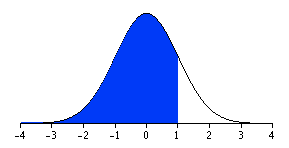
Figure 2 — Gaussian distribution. Blue shaded area ≈ 84% probability of success for a credit spread one σ OTM.
The Profit Engine of the Iron Condor
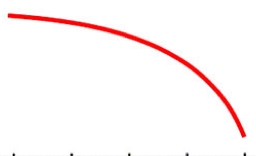
Figure 3 — Time value ($) of an iron condor decays as days-to-expiration approaches zero. This decay is the iron condor's profit engine.
Risk Management for the Iron Condor
- A contingency stop loss order.
- Adjustment technique.
- An adjustment trigger.
- A time stop.
- A profit stop.
Contingency Order Triggers
Here are some guidelines for selecting the contingency order trigger price:
- Watch the delta of the short option; when it reaches 35, I should be out of the trade.
- For example, on 12/15/09 with the RUT at $606, I establish an iron condor with the 510/520 puts and the 680/690 calls; the $580 put has delta = 33, so I set my contingency order to trigger at a value of $26 (606 – 580 = 26) above my short put strike price. So my contingency stop loss order would trigger if the price of RUT drops below $546 (520 + 26).
Judgment Call:
- Set trigger farther down = greater risk of loss.
- Set trigger closer = greater risk of being whipsawed out of the trade.
Adjustment Techniques
- The 200% Rule – Monitor the debit required to close your spreads; when the debit to close is ≥ 200% of the original credit, close all of the spreads on that side.
- Closing Spreads – If the delta of either short option ≥ 18, close one third of the spreads on that side. If the delta of either short option hits 30, close the remaining spreads on that side.
- The Buy Back – If the delta of either short option ≥ 18, buy back some of the short options. If the delta of the short option returns to 15, sell options to recreate the spreads. If the delta of either short option hits 30, close the spreads on that side and sell the extra long option(s).
- The Long Hedge – If the delta of either short option ≥ 18, buy long options at the short strike in the next month. If the delta of the short option returns to 15, sell the long option(s). If the delta of either short option hits 30, close the spreads on that side and sell the long option(s).
- Rolling Spreads – When you close all of the spreads on a side, you may choose to roll up or down to continue the trade.
Pros and cons:
| Adjustment | Pros | Cons |
|---|---|---|
| The 200% Rule | Simple and easy to use. Very conservative; rare to lose much money. | Frequently stopped out of trades. |
| Closing Spreads | Reduces one's potential loss. Strong delta impact. | Minimal theta damage. |
| The Buy Back | Flattens the R/R curve (big advantage). Requires less capital than the Long Hedge. | Smaller delta impact. Worst theta damage. |
| The Long Hedge | Flattens the R/R curve best. Strong delta impact. | Moderate theta damage. Increases the capital at risk. |
Additional guidance:
- When making adjustments to your condor position, try to reduce delta without reducing theta too much.
- If the proposed adjustment causes theta to go negative, then close the position.
- If using the Buy Back or Long Hedge adjustments, watch the near term risk/reward curve; we want to flatten the slope so that additional movement of the index against us does not hurt us too much.
- When your adjustment has played out and you close the spreads on that side, you may roll those spreads up or down to continue the trade.
- You may also want to consider rolling the spreads on the "good" side. But this is increasing your risk.
- Some traders increase the number of contracts when they roll the spreads to recover the loss of closing; but beware of this tactic – you are increasing the capital at risk.
The key to success in trading the iron condor is managing your risk.
If you are careful to minimize your losses, your gains will come.
Using the Greeks
- Delta measures the risk of your position to a price move, e.g., if my position delta = −$125 and the index increases by $12 tomorrow, my position will lose $1,500.
- Therefore, keep delta small; I watch the theta/delta ratio more than the absolute value of delta.
- Your adjustment criteria will function to keep you within some delta limits, or could use position delta as our adjustment trigger.
- The positive theta value measures the beneficial effect of time decay on our position.
- Be careful that your adjustments do not remove too much theta.
- If theta ever goes negative, close the trade.
- Watch the ratio of theta to delta. Ratios > 2:1 are good (the higher, the better).
- When the theta/delta ratio is approximately 1:1, this is dangerous ground. May have to close or roll spreads soon.
Back-Testing the Adjustment Techniques
All three case studies below triggered adjustments when the delta of either short option exceeded 16 (closing spreads, buy back and long hedge), and also observed the 200% Rule. In every case, all adjustments held the loss to ≤ one month's gains.
Case A — 2/5/10: Mar RUT 510/520 and 650/660 iron condor
- Credit = $2,800 on 20 contracts.
- Adjustment trigger: delta of either short option > 16.
- 2/12/10: delta of the 650 call = 17; closing spreads, buy back and long hedge adjustments triggered.
- 2/16/10: 200% rule triggered.
- 3/1/10: all call spreads closed; puts allowed to expire worthless.
| Date | Adjustment | New Delta | % Change | New Theta | % Change | Net G/L |
|---|---|---|---|---|---|---|
| 2/12/10 | Closing Spreads | −$54 | −44% | +$78 | −26% | −$2,080 |
| 2/12/10 | Buy Back | −$62 | −35% | +$76 | −28% | −$2,750 |
| 2/12/10 | Long Hedge | −$45 | −53% | +$77 | −27% | −$2,220 |
| 2/16/10 | 200% Rule | n/a | n/a | n/a | n/a | −$700 |
Case B — 7/8/09: Aug RUT 390/400 and 550/560 iron condor
- Credit = $2,960 on 20 contracts.
- Adjustment trigger: delta of either short option > 16.
- 7/15/09: delta of the 550 call = 22; closing spreads, buy back and long hedge adjustments triggered.
- 7/15/09: 200% rule triggered.
- 7/23/09: all call spreads closed; puts allowed to expire worthless.
| Date | Adjustment | New Delta | % Change | New Theta | % Change | Net G/L |
|---|---|---|---|---|---|---|
| 7/15/09 | Closing Spreads | −$71 | −39% | +$64 | −26% | −$3,400 |
| 7/15/09 | Buy Back | −$72 | −38% | +$53 | −39% | −$3,270 |
| 7/15/09 | Long Hedge | −$56 | −52% | +$57 | −34% | −$2,750 |
| 7/15/09 | 200% Rule | n/a | n/a | n/a | n/a | −$560 |
Case C — 9/2/08: Oct RUT 660/670 and 810/820 iron condor
- Credit = $5,200 on 20 contracts.
- Adjustment trigger: delta of either short option > 16.
- 9/4/08: delta of the 810 call = 22; closing spreads, buy back and long hedge adjustments triggered.
- 9/15/08: 200% rule triggered.
- 9/15/08: all put spreads closed; calls allowed to expire worthless.
| Date | Adjustment | New Delta | % Change | New Theta | % Change | Net G/L |
|---|---|---|---|---|---|---|
| 9/4/08 | Closing Spreads | +$9 | −75% | +$75 | −18% | −$1,301 |
| 9/4/08 | Buy Back | −$10 | −128% | +$39 | −58% | +$580 |
| 9/4/08 | Long Hedge | −$20 | −156% | +$48 | −48% | +$920 |
| 9/15/08 | 200% Rule | n/a | n/a | n/a | n/a | −$1,000 |
Back-testing conclusions
- The 200% rule is simple and usually gets you out of the trade early for a minimum loss.
- The Long Hedge decreases delta the most with less theta damage.
- The Buy Back causes the most theta damage.
- The Buy Back and Long Hedge adjustments allow you to salvage a trade.
- The Long Hedge requires more capital to be put at risk.
All of these adjustments accomplish the key objective: minimize the losses in the "bad" months so you can be profitable in the long term.
Develop the Iron Condor Trading Plan
- Develop and follow a consistent trade entry process.
- Immediately after establishing the position, enter the stop loss order with the broker.
- Write down the key points of your trading plan:
- What is the stop loss price trigger?
- I will adjust at what point? What is the specific measure?
- What adjustment will I use?
- Is there a time stop?
- Is there a profit level at which I will close the position?
- If I close the spreads on one side:
- Will I roll those spreads up or down?
- Will I increase the number of contracts to cover the debit?
- Will I roll the "good" spreads at the same time?
Summary
The iron condor:
- Is an excellent income generating trading strategy.
- Doesn't require you to predict where the market is going.
- But risk management is crucial for long term success.
Source: original PDF "How To Adjust the Iron Condor" by Kerry W. Given, Ph.D. (Dr. Duke), Parkwood Capital, LLC, © 2011. Translated and re-typeset from the original PDF for readability.